





The Koala News
  • News
    • All
    • Accommodation
    • Agents
    • Breaking
    • Compliance
    • Data
    • Ed-Tech
    • English Language
    • Market Update
    • Opinion
    • Policy
    • Profile
    • Research
    • Schools
    • Sponsored Content
    • Student Mobility
    • Student Recruitment
    • Student Support
    • TNE
    • World
    Recruitment alone won’t close Australia’s skills gaps

    Recruitment alone won’t close Australia’s skills gaps

    QS rankings 2026: NZ Unis all feature in the top 30 per cent

    New Zealand international students give experience record 90% approval

    Pearson and WorldSkills join forces to give vocational skills a place in Australia’s future workforce

    Pearson and WorldSkills join forces to give vocational skills a place in Australia’s future workforce

    Australia became part of the Nepali dream. Now a new generation is asking whether it is still worth the risk

    Nepal deserves its own place on the global education map

    Collaboration remains higher education’s greatest technology advantage

    Collaboration remains higher education’s greatest technology advantage

    Hill considers first use of ESOS powers to suspend student recruitment

    Hill considers first use of ESOS powers to suspend student recruitment

    Australian bank accounts among proposed student visa reforms

    Australian bank accounts among proposed student visa reforms

    ICEF Agent Voice 2026: The International Education Market Isn’t Shrinking. It’s Rebalancing.

    ICEF Agent Voice 2026: The International Education Market Isn’t Shrinking. It’s Rebalancing.

    Austrade upgrades EDI platform as providers look to diversify their international strategy

    Austrade upgrades EDI platform as providers look to diversify their international strategy

    The real AI divide in international education is integration, not adoption

    The real AI divide in international education is integration, not adoption

    Trending Tags

    • Austrade
    • English
    • Student Data
    • Awards
    • Schools
  • About
  • Contributors
  • Advertise
  • Jobs
  • Events
  • Subscribe
  • Archive
  • Shop
  • Contact
No Result
View All Result
The Koala News
No Result
View All Result
Home News English Language

More Than Words: English Education Bringing Hope to Displaced Communities

Dirk MulderbyDirk Mulder
June 18, 2026
in English Language
More Than Words: English Education Bringing Hope to Displaced Communities
Share on LinkedinShare on TwitterShare on FacebookShare via Email

The latest evaluation of the Global English Language (GEL) Programme offers a timely reminder that international education is about far more than recruitment targets, visa settings and export earnings. At its best, education can rebuild lives, restore confidence and reconnect communities fractured by conflict.

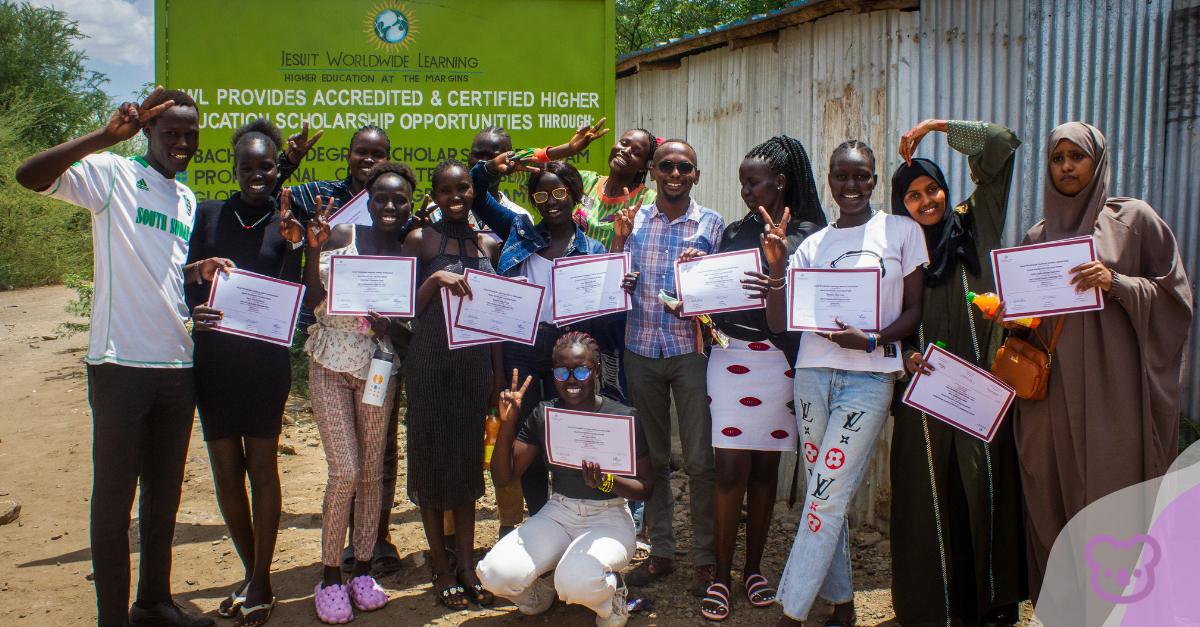
A new report from Cambridge University Press & Assessment and Jesuit Worldwide Learning (JWL), Language as a Tool to Recover and Rebuild: The Impact of the Global English Language (GEL) Programme in Iraq and Kenya, reveals the profound role English language education can play in communities affected by war, displacement and marginalisation.

The findings are striking. Across Iraq and Kenya, 90 per cent of participants said learning English through the GEL programme had improved their lives, while 81 per cent believed it had given them opportunities to improve the lives of others in their communities. Ninety per cent reported increased confidence interacting with others in English, and 72 per cent said the courses had improved their employment prospects or professional development.

Since launching in 2017, the programme has reached more than 32,000 learners across over 30 countries, with around 65 per cent of participants being women. It operates in some of the world’s most challenging environments, serving forcibly displaced people, returnees and marginalised communities through locally run learning centres.

The evaluation focused specifically on learners in Iraq and Kenya. In Iraq, many participants were Yazidi returnees rebuilding their lives after the atrocities committed by the Islamic State. In Kenya, learners included refugees from neighbouring countries living in Kakuma Refugee Camp, Kalobeyei settlement and Nairobi.

While the report confirms that English improves access to employment and education, its most compelling insight is that language learning also serves as a mechanism for healing.

For many Yazidi learners in Iraq, the classroom became a place to reclaim agency after years of trauma and exclusion.

“Learning English with GEL has given me the opportunity to improve my life by enhancing my communication skills, building my confidence, and opening doors to more educational and professional opportunities,” one student said. “It has also helped me connect with people from different cultures, participate in global discussions, and express my ideas clearly.”

Some students travelled extraordinary distances to attend classes, walking kilometres through intense summer heat and hitching rides simply to reach the learning centre.

“I had to walk about 3 kilometres in the summer heat every day to reach the highway that leads to the centre of Sinjar,” one participant recalled. “For me, it was worth it, and I would do it again if I had a chance.”

These stories challenge the often transactional way English language education is discussed. In many developed countries, English proficiency is framed primarily as a pathway to university admission or employment. Yet for learners emerging from conflict, language becomes something deeper: a means of restoring identity and participation.

The report highlights how learning together helped rebuild trust between individuals from different ethnic and religious backgrounds.

“In the beginning, I felt uncomfortable because I didn’t know my classmates,” one Iraqi student said. “I didn’t want to share my life with them but now we are like a family.”

Perhaps most powerfully, English gave Yazidi learners the ability to tell their own stories to the world.

“ISIS committed genocide against the Yazidi people in Sinjar,” one student explained. “Before the course, I wasn’t able to explain this. I would like to let people from outside know what happened here.”

In Kenya, English was similarly viewed as more than an academic subject. Participants described it as a practical tool for coexistence among refugee populations speaking multiple languages.

“In 2016, we experienced conflict in the camp. And the main source of it was the language barrier,” one student said. “So, we decided to have this initiative to build the community together, to teach people some basic English skills.”

Facilitators also observed that classrooms became informal support networks where learners shared experiences of trauma and recovery.

“People have been traumatised in the countries where they came from,” a Kenyan facilitator said. “I believe education is a way to manage some of these traumas.”

Another important theme emerging from the report is the multiplier effect of education. Learners frequently used their English skills to support others by translating documents, helping community members prepare CVs and guiding young people through applications for education opportunities.

“English has become a bridge that connects us to the world,” one Kenyan participant noted.

For the international education sector, these findings arrive at an important moment. As policymakers debate caps, migration settings and economic contribution, the report serves as a reminder that education’s value cannot always be measured in export dollars.

Language education creates employability. But it can also foster social cohesion, rebuild confidence after conflict, amplify marginalised voices and restore hope where opportunity has been scarce.

The evaluation did identify areas for improvement. Female learners in Kenya, despite accounting for 51 per cent of enrolments between 2019 and 2024, were only half as likely as men to complete three GEL courses, reflecting the influence of traditional gender roles and other barriers to participation. In response, JWL has strengthened support mechanisms and expanded delivery into high schools to engage female learners earlier.

Ultimately, the report reinforces a simple but powerful truth. Education is not merely preparation for life; in communities recovering from displacement and violence, it can be part of the recovery itself.

For international educators accustomed to discussing student outcomes in terms of grades, graduate salaries and rankings, the GEL programme offers a broader perspective. Sometimes the most important outcome of learning English is not simply securing a job or passing an exam.

Sometimes it is finding the confidence to speak again.

Tags: Cambridge University Press and Assessment
Previous Post

National Day of Connection Highlights the Hidden Loneliness Epidemic

Next Post

QS Rankings Released: Australia’s Universities Climb the Global Ladder but Warning Signs Emerge

Dirk Mulder

Dirk Mulder

Dirk Mulder is the founder of the Koala and Principal of MulderPR, a strategy and marketing communications consultancy specialising in international education. Dirk has had extensive experience in International Education and Service Management, holding Directorships at the University of South Australia, Curtin University and Murdoch University as well the Lead for International Student Initiative across the Asia Pacific region at Allianz Partners. He has been member of the boards of Perth Education City (now StudyPerth) and Education Adelaide, he has chaired the Universities of Perth International Directors Forum and has been a past board member of the Hawkesbury Alumni Chapter, his alma mater. His views are widely published and quoted across the media and has been seen in Campus Morning Mail, the Australian Financial Review and ABC television and online. Acknowledgement/disclosure: Dirk holds shares in and outside of the education sector including in IDP Education.

Next Post
QS Rankings Released: Australia’s Universities Climb the Global Ladder but Warning Signs Emerge

QS Rankings Released: Australia's Universities Climb the Global Ladder but Warning Signs Emerge

What Now? What Next? What Now? What Next? What Now? What Next?
Cambridge Cambridge Cambridge
iDAT Logo iDAT Logo iDAT Logo
The Koala News

The Koala is intelligent, it can be cheeky, it aims to be informative and is uniquely Australian though proudly global.

It unashamedly promotes best practice in International Education. It loves seeing students succeed via vibrant offerings and a supporting mix of policy, recruitment and support settings.

Follow the Koala

Get the App for your mobile device

Subscribe: Have the Koala Delivered to your Inbox

  • About
  • Terms of Use
  • Privacy Policy
  • Contact

© 2023 The Koala News

The Koala News app
Get
No Result
View All Result
  • News
  • About
  • Contributors
  • Advertise
  • Jobs
  • Events
  • Subscribe
  • Archive
  • Shop
  • Contact

© 2023 The Koala News











