








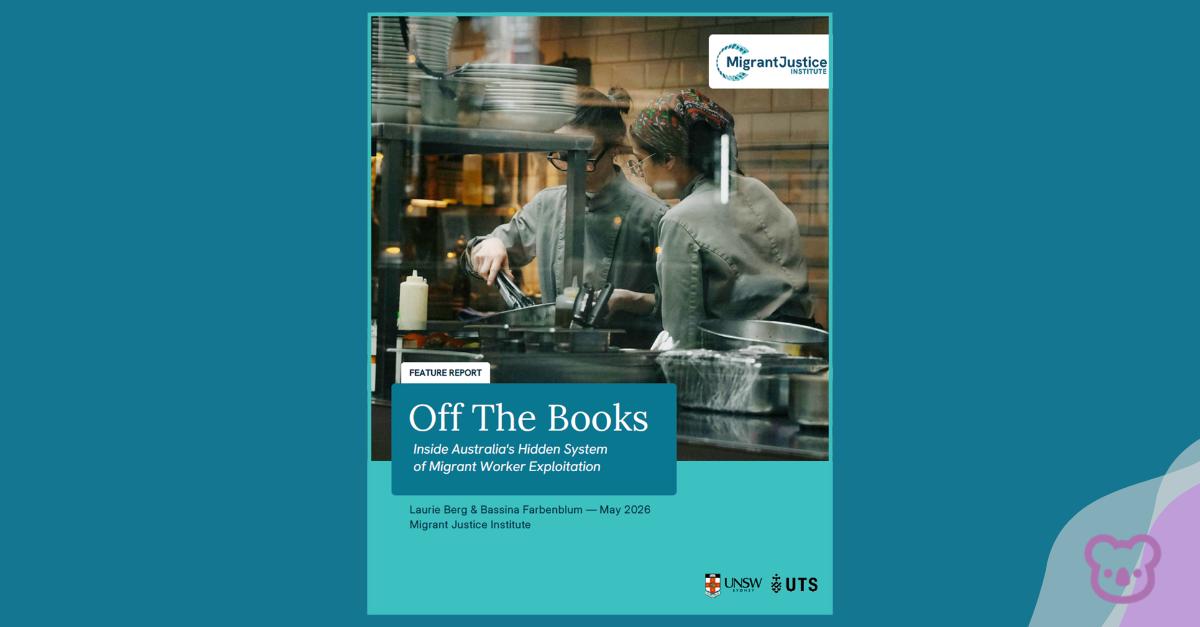
International students are being underpaid by an estimated $61 million every week, adding up to around $3.18 billion annually, according to a new report on migrant worker exploitation by the Migrant Justice Institute.
The report also argues that increasing the cap on student working hours could help reduce the risk of exploitation while responding to the cost-of-living pressures faced by international students in Australia.
Released last week, Off The Books: Inside Australia’s hidden system of migrant worker exploitation presents findings from a survey of almost 10,000 temporary migrants working in Australia during 2023–24, including international students, backpackers, graduate visa holders and employer-sponsored workers.
The report also found that two-thirds of migrant workers in Australia are paid below the national minimum wage and Australian businesses systematically underpay migrants working on temporary visas. It calls for stronger interventions to prevent employers from using insecure work arrangements to avoid their responsibilities under the Fair Work Act.
In addition to the student working hours increase, the report provides several recommendations to the Commonwealth Government including ensuring that migrants recover the wages they are owed, investing in worker rights education and protecting workers who report abuse.
One of the most common themes among international students surveyed was that the 48-hour per fortnight cap was a significant barrier to finding work, with some employers reportedly unwilling to hire international students because of the restriction.
Students reported feeling forced to breach the work limit because of unpredictable work hours, while threats of visa cancellation for these breaches made them even more vulnerable to exploitation. Students also reported being unable to earn enough income to cover tuition and living expenses.
The restriction also pushes many into working in ‘cash jobs’, leading to underpayment of wages. The report found that one in two (50%) international students perceived underpayment as widespread among their peers, with a further third (33%) believing that ‘some’ international students are underpaid.
“In some areas, employers take it for granted that they pay international students less than the statutory hourly wage and pay them in cash because they generally believe that international students have “poor English” and “low ability,” said an international student from China.
In response, the report recommends:
“The government should evaluate the impact of increased cost of living on international students, the impact of the work restriction on employer willingness to hire international students in lawfully paid jobs, and the impact of widespread underpayment and mistreatment in the jobs in which most international students work, including the consequences of poor working conditions and financial distress on international students’ studies, experience in Australia, and mental health”.
However, the increase in the cap on student working hours is unlikely to be broadly supported by the international education sector.
Although most will be sympathetic to the plight of international students, the challenge for the sector is that it has seen the consequences of the uncapping of work rights by the former Morrison Government just after COVID restrictions were lifted, including attracting non-genuine students to Australia.
There was also anecdotal evidence at the time of students not attending classes because they were working, which impacts student success rates. And others will argue that access to sufficient funds is a condition when applying for a student visa.
The challenge for the sector and for policymakers is that while tighter work restrictions are linked to protecting the integrity of the student visa program, the same settings may also be pushing some students into insecure and exploitative work.
The full report can be found here.