









There is a version of the international student experience that gets talked about a lot. It is the one built around growth, opportunity and outcomes. Then there is the version students actually live through.
That version can look quite different.
The data has been consistent for some time. International students report higher levels of psychological distress, loneliness and anxiety than domestic students. The reasons are not abstract. They are practical and immediate. Being far from home. Managing money in a system that is not always predictable. Trying to secure stable housing. Working out how to belong in a new place.
What is less consistent is how often students reach out for help.
Cost plays a role. So does stigma. Awareness is patchy. For some students, cultural expectations make it difficult to even name what they are feeling, let alone speak about it with a stranger. The services may exist, but the pathway into them is not always clear or comfortable.
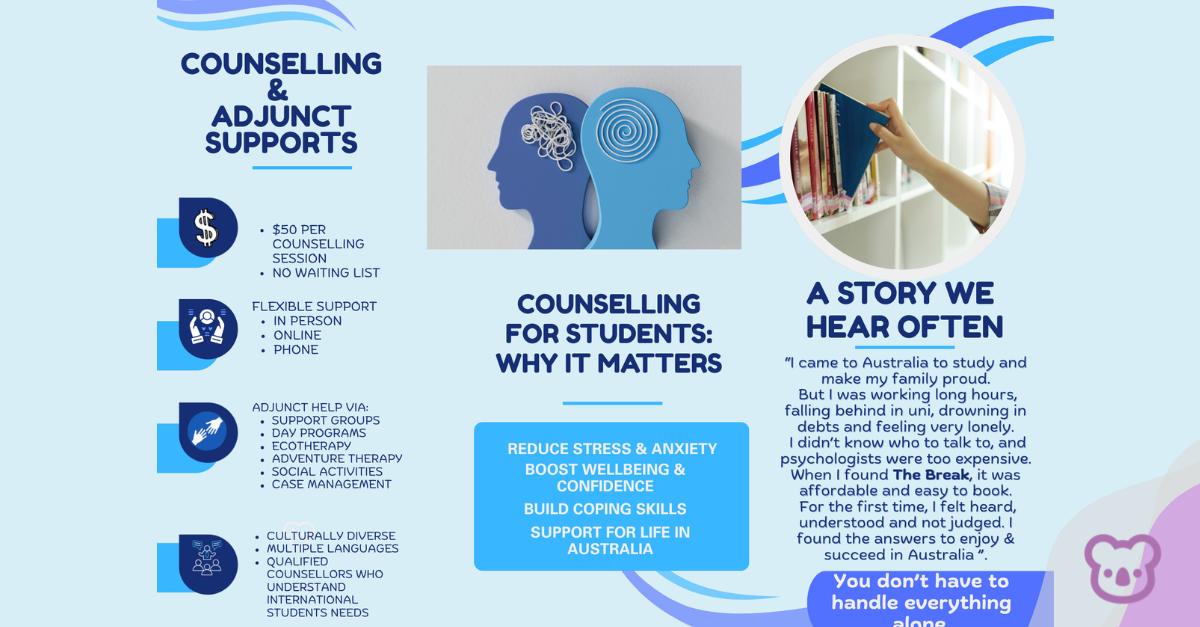
This is the space The Break has moved into.
It is not trying to replicate what universities already offer. If anything, it is working around those structures. The focus is on making support feel normal, accessible and low pressure. Counselling is priced at a level that removes some of the hesitation. Group activities like eco therapy and kayaking shift the setting entirely. The idea is simple. Get people moving, get them outside, create moments where conversation can happen without being forced.
It is a different entry point.
The same thinking sits behind its support groups and the Open Circle program. Not every student is ready to walk into a formal counselling session. Some just need a space where they can talk, or listen, without feeling exposed. For LGBTQ+ students and others navigating cultural barriers, that kind of space can be hard to find. Open Circle is built with that in mind.
There is also something practical in the scale of what is happening. Around 390 students are engaging with The Break’s programs each month. Across a year, that moves towards 4700. These are not just numbers. They are students who have found a way into support that might otherwise have felt out of reach.
Awareness is part of the model as well. Partnerships with SBS Radio, 4EB Radio and Himalayan Radio are not just about promotion. They are about meeting students where they are, in language and through channels they already trust. That matters when the issue is something as personal as mental health.
None of this replaces what institutions are doing. But it does point to a gap that has been sitting there for a while. Formal services tend to rely on students stepping forward. Community based models tend to meet them earlier, and sometimes more effectively.
That distinction is becoming harder to ignore.
As the sector continues to focus on policy settings and growth settings, the day to day student experience still shapes how Australia is perceived as a study destination. Wellbeing sits right at the centre of that, even if it is not always treated that way.
The Break is not a large organisation in sector terms. But its role is becoming clearer. It is picking up the parts of the student experience that do not always fit neatly into institutional frameworks.
And for a growing number of students, that is making a difference.
For more information see here.