









The ABS released the latest population data last week and as Tracy Harris writing in the Koala News has reported, the data shows a slight dip in net overseas migration figures:
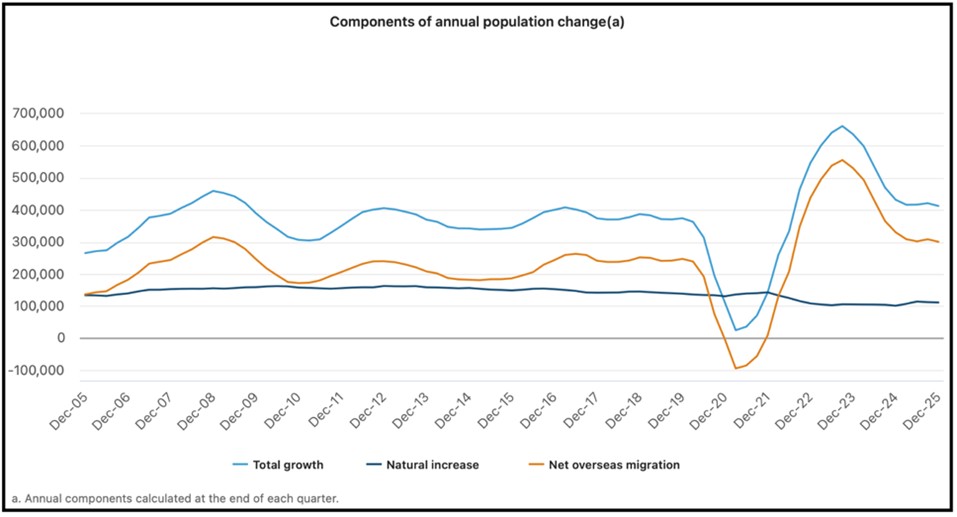
Reflecting on the data, former Immigration Department Secretary Abul Rizvi pointed out that the figure is still higher than the government’s net migration target of 225,000. He argues that “Labor will need to do more tightening soon or it won’t get to its target before the Election.” Sadly I agree with his conclusion and my expectation is that this will involve more measures impacting international education.
Some people in the sector have been speculating that the government may follow the UK government’s lead – and stop international students bringing their dependents (partners and/or children) with them, except where they are undertaking postgraduate research programs.
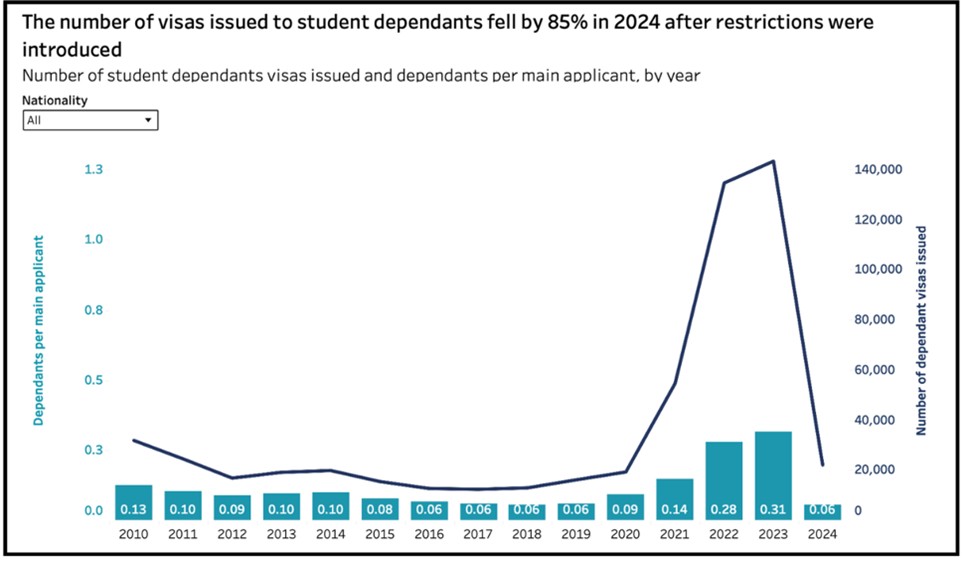
In the UK, the change to ban students bringing their dependents had an immediate impact. The Migration Observatory at the University of Oxford’s analysis shows that 1 in 3 students to the UK in 2023 bought their families with them, and there were more than 143,000 student dependents’ visas issued in that year. After the change was made to ban students bringing their dependents, the numbers of visas issued to dependents of students fell 85%.
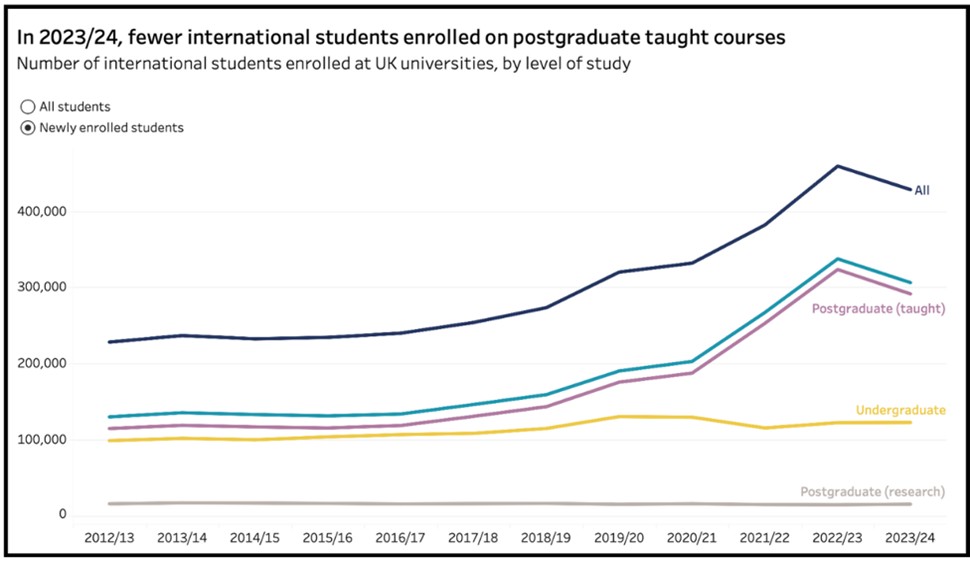
The number of students enrolling in UK postgraduate coursework programs also fell as a consequence:
In Australia in the last full financial year (2024-2025) – there were:
- a total of 371,564 international student visas granted
- 48,791 of these were secondary visas (ie granted to dependents of primary visa holders), and
- 4,681 of the secondary visas issued were granted to dependents of postgraduate research students.
That means that 1 in 10 of all student visas issued in the last financial year were for secondary visa holders (ie dependents of students who were not doing postgraduate research degrees).
So based on last year’s enrolment patterns – if the Australian government followed the UK’s lead they could immediately cut Net Overseas Migration by around 44,000 (secondary visa holders of students not doing postgraduate research ie 48,791 – 4,681 secondary visa holders).
We could also expect many prospective students who were planning to bring family members with them to Australia, would also look to study elsewhere (hello New Zealand with its ‘Going for Growth’ international education strategy!).
Summing that approximately 40,000 prospective students look for other destinations because they would not be able to bring their family members with them, we could easily see numbers fall by ~80,000, although an unknown number of students with dependents who choose another country would likely be replaced by other students who do not have dependents.
And when it comes to the latest data on secondary temporary graduate work visas: 41,082 were granted in 2024-25. The data does not distinguish how many went to family members of students who had done postgraduate research degrees.
All of which means that if the government did follow the UK lead we would see the same immediate drop in visas issued to students with families (because they will stop applying), plus a sizeable decrease in secondary visas issued, plus a drop in demand for post-graduate work visas.
All of which would reduce Australia’s attractiveness as a study destination, reduce the number of skilled graduates Australian employers would readily be able to recruit to fill vacancies, but it would also reduce net overseas migration numbers.