







The Koala News
  • News
    • All
    • Accommodation
    • Agents
    • Breaking
    • Compliance
    • Data
    • Ed-Tech
    • English Language
    • Market Update
    • Opinion
    • Policy
    • Profile
    • Research
    • Schools
    • Sponsored Content
    • Student Mobility
    • Student Recruitment
    • Student Support
    • TNE
    • World
    ISANA Conference 2026 turns resilience into practical action

    ISANA Conference 2026 turns resilience into practical action

    Burke unveils migration changes targeting students, workers and visa hopping

    Burke unveils migration changes targeting students, workers and visa hopping

    Graduation is not the end of the student finance conversation

    Graduation is not the end of the student finance conversation

    Anouk Darling: Opening the PBSA Forum

    Anouk Darling: Opening the PBSA Forum

    Sydney forum puts PBSA’s bigger role in the spotlight

    Sydney forum puts PBSA’s bigger role in the spotlight

    Torrens strengthens research leadership for next phase of growth

    Torrens strengthens research leadership for next phase of growth

    We tell the world to come to Australia. So why are we telling international students they’re the problem?

    We tell the world to come to Australia. So why are we telling international students they’re the problem?

    Cricket gives UC another way into India’s international student market

    Cricket gives UC another way into India’s international student market

    Market Way adds 1,010 student beds to Melbourne CBD

    Market Way adds 1,010 student beds to Melbourne CBD

    From Cash Cows to Valued Voices: New Report Calls for Major Shift in How Australia Supports International Students

    Recognition matters as globally mobile students keep their options open

    Trending Tags

    • Austrade
    • English
    • Student Data
    • Awards
    • Schools
  • About
  • Contributors
  • Advertise
  • Jobs
  • Events
  • Subscribe
  • Archive
  • Shop
  • Contact
No Result
View All Result
The Koala News
  • News
    • All
    • Accommodation
    • Agents
    • Breaking
    • Compliance
    • Data
    • Ed-Tech
    • English Language
    • Market Update
    • Opinion
    • Policy
    • Profile
    • Research
    • Schools
    • Sponsored Content
    • Student Mobility
    • Student Recruitment
    • Student Support
    • TNE
    • World
    ISANA Conference 2026 turns resilience into practical action

    ISANA Conference 2026 turns resilience into practical action

    Burke unveils migration changes targeting students, workers and visa hopping

    Burke unveils migration changes targeting students, workers and visa hopping

    Graduation is not the end of the student finance conversation

    Graduation is not the end of the student finance conversation

    Anouk Darling: Opening the PBSA Forum

    Anouk Darling: Opening the PBSA Forum

    Sydney forum puts PBSA’s bigger role in the spotlight

    Sydney forum puts PBSA’s bigger role in the spotlight

    Torrens strengthens research leadership for next phase of growth

    Torrens strengthens research leadership for next phase of growth

    We tell the world to come to Australia. So why are we telling international students they’re the problem?

    We tell the world to come to Australia. So why are we telling international students they’re the problem?

    Cricket gives UC another way into India’s international student market

    Cricket gives UC another way into India’s international student market

    Market Way adds 1,010 student beds to Melbourne CBD

    Market Way adds 1,010 student beds to Melbourne CBD

    From Cash Cows to Valued Voices: New Report Calls for Major Shift in How Australia Supports International Students

    Recognition matters as globally mobile students keep their options open

    Trending Tags

    • Austrade
    • English
    • Student Data
    • Awards
    • Schools
  • About
  • Contributors
  • Advertise
  • Jobs
  • Events
  • Subscribe
  • Archive
  • Shop
  • Contact
No Result
View All Result
The Koala News
No Result
View All Result
Home News Ed-Tech

Australia’s AI skills gap is becoming universities’ next big problem

Dirk MulderbyDirk Mulder
May 28, 2026
in Ed-Tech, Market Update, Policy
Australia’s AI skills gap is becoming universities’ next big problem
Share on LinkedinShare on TwitterShare on FacebookShare via Email

Australia’s rush toward workplace AI adoption is creating a dangerous illusion of capability and universities are now being warned they may be focusing on the wrong battle entirely.

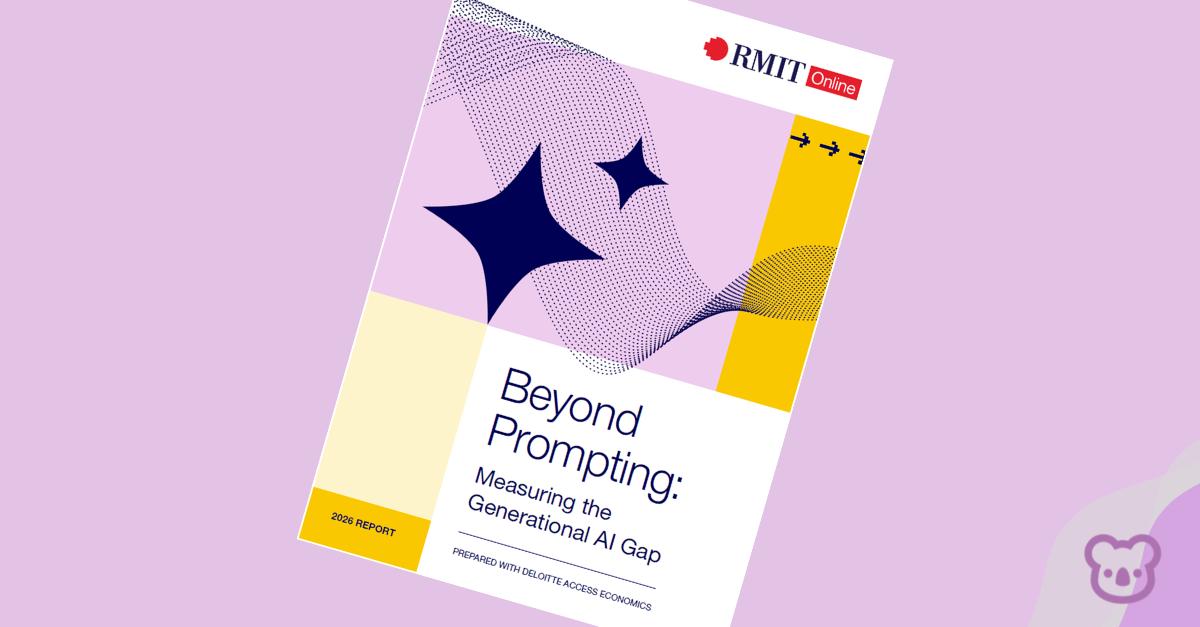
New research from RMIT Online and Deloitte Access Economics has found that while AI tools have become deeply embedded across the workforce, the overwhelming majority of Australians still lack the judgement skills needed to use them responsibly. The report estimates the country is missing out on an economic opportunity worth $18.9 billion because so many workers remain at beginner levels of AI literacy.

The findings expose a growing disconnect between adoption and literacy. While 84 per cent of Australians now use at least one AI tool at work, only seven per cent possess advanced AI literacy. Workers were found to be twice as likely to develop technical AI skills like prompting than the critical judgement capabilities needed to identify hallucinations, bias, legal risks and misinformation.

For the higher education sector, the report lands squarely in the middle of an already heated debate around generative AI in classrooms. Universities have spent the past two years tightening assessment rules, introducing AI policies and attempting to police misuse. But the report suggests the bigger challenge may not be stopping students from using AI at all, but ensuring they know how to use it properly before they graduate.

Anshu Arora, Director, Customer Success & Growth at RMIT Online, says, “As universities navigate the AI transition, we’ll need to move beyond policing where and how students are using AI to assist with their studies, and instead focus on teaching students to use AI safely, critically and strategically.

“AI literacy is rapidly becoming a core workforce capability, much like digital literacy before it. RMIT Online’s research shows that while 84% of Australian workers are using at least one type of AI, only 7% possess advanced AI literacy. The critical issue facing graduates is the growing gap between technical fluency and sound judgement.

“Workers are also roughly twice as likely to be advanced in technical AI skills (21%) as they are in judgement-based skills (11%). As a result, we are seeing a workforce that knows how to write a prompt but struggles to spot a hallucination, question bias, or recognise legal and reputational risks.”

The report also identified a generational fault line emerging across Australian workplaces. Younger workers are adopting AI faster and displaying stronger technical capability, but they are also far more likely to overestimate their proficiency. Gen Z workers were found to be twice as likely as Baby Boomers to overstate their AI skills, raising concerns about misuse and overconfidence in professional settings.

At the same time, older workers remain significantly more hesitant to engage with AI tools at all, despite often occupying the senior leadership positions responsible for guiding workplace adoption.

That tension is already beginning to shape university classrooms, where students are increasingly expected to integrate AI into assessments while still demonstrating originality, transparency and critical thinking.

Juliette Chang, RMIT Fashion Enterprise Student, provides the student perspective. She says, “As a fashion enterprise student balancing university with internships in marketing and product development, AI is already embedded in my daily routine. I use it to streamline routine tasks like drafting social media captions, generating references, and even using 3D tools to visualise garment designs on digital avatars.

“However, growing up as a digital native doesn’t automatically mean you can trust everything these tools produce. Critical thinking is incredibly important when using AI because sometimes it produces the wrong things. You can use tools like generative AI as an initial base to generate ideas, but you can’t rely on it as a definitive source — you always need to follow the links through and verify the information.”

The research found AI now saves the average worker nine hours per week, yet nearly half of employees are simply using that time to complete more tasks rather than build new skills. The report warns that without structured training and stronger evaluation capabilities, businesses risk creating a workforce that can operate AI tools without fully understanding the consequences of using them.

That concern is becoming increasingly relevant for universities attempting to prepare graduates for AI-heavy workplaces while still preserving academic standards and human creativity.

Arora says, “Given the increasing importance of AI in workplaces, educational institutions will need to start treating AI literacy as a fundamental graduate capability. This means teaching students not just how to use these tools, but how to critically evaluate outputs and apply them strategically and ethically. Young workers are particularly vulnerable as Gen Z are twice as likely to overstate their AI skills compared to baby boomers, which increases the risk of misuse if they are not equipped with strong critical evaluation skills.

“By shifting our focus from policing to enabling, institutions will be better equipped to prepare graduates for the new outside world, who will become genuinely prepared and skilled to use AI effectively, responsibly, and confidently.”

For students already working with AI daily, the issue appears less about whether the technology belongs in education and more about how transparently and responsibly it is used.

Chang, says on this, “I believe universities should encourage students to use AI, provided there is a strong focus on transparency. For example, my university requires mandatory AI declaration forms that detail exactly how we use these tools. This approach teaches us to use AI as a starting point, all while reinforcing that our own judgement and creative input remain essential. While AI is an exciting, time-saving tool, it can’t replace original human thought and interaction.”

The report’s message to universities is becoming difficult to ignore. The AI debate may have started with concerns about cheating, but the bigger risk increasingly appears to be graduating students who know how to use AI tools without understanding when not to trust them.

For more information and to download the report, see here.

Tags: AI
Previous Post

2050 Alliance Sets Collaborative Agenda for Australia’s Higher Education Future

Next Post

ACBC announces program for forum on 9 June

Dirk Mulder

Dirk Mulder

Dirk Mulder is the founder of the Koala and Principal of MulderPR, a strategy and marketing communications consultancy specialising in international education. Dirk has had extensive experience in International Education and Service Management, holding Directorships at the University of South Australia, Curtin University and Murdoch University as well the Lead for International Student Initiative across the Asia Pacific region at Allianz Partners. He has been member of the boards of Perth Education City (now Study Perth) and Education Adelaide, he has chaired the Universities of Perth International Directors Forum and has been a past board member of the Hawkesbury Alumni Chapter, his alma mater. His views are widely published and quoted across the media and has been seen in Campus Morning Mail, the Australian Financial Review and ABC television and online. Acknowledgement/disclosure: Dirk holds shares in and outside of the education sector including in IDP Education.

Next Post
ACBC to host strategic talks on international education and the visitor economy

ACBC announces program for forum on 9 June

What Now? What Next? What Now? What Next? What Now? What Next?
Cambridge Cambridge Cambridge
iDAT Logo iDAT Logo iDAT Logo
The Koala News

The Koala is intelligent, it can be cheeky, it aims to be informative and is uniquely Australian though proudly global.

It unashamedly promotes best practice in International Education. It loves seeing students succeed via vibrant offerings and a supporting mix of policy, recruitment and support settings.

Follow the Koala

Browse by Category

Subscribe: Have the Koala Delivered to your Inbox

  • About
  • Terms of Use
  • Privacy Policy
  • Contact

© 2023 The Koala News

No Result
View All Result
  • News
  • About
  • Contributors
  • Advertise
  • Jobs
  • Events
  • Subscribe
  • Archive
  • Shop
  • Contact

© 2023 The Koala News